Plant-dyed ice sculptures bring color to Harbin Ice and Snow World

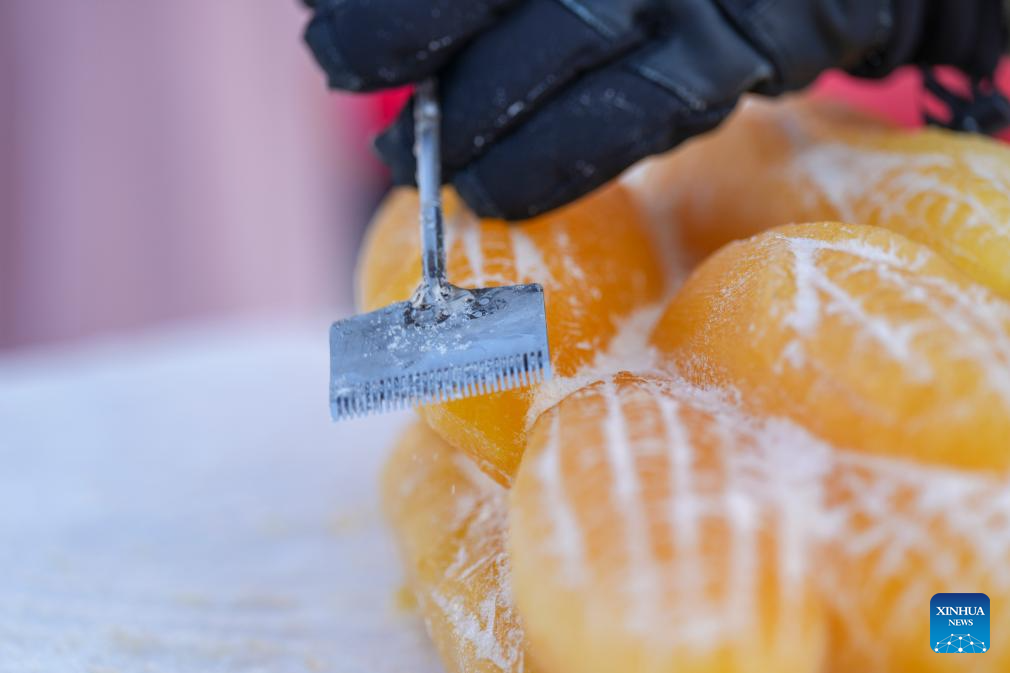
A sculptor carves a plant-dyed ice sculpture at the Harbin Ice and Snow World in Harbin, northeast China's Heilongjiang Province, Jan. 28, 2026. Using plant-dyed ice for carving, ice sculptors brought a fresh visual experience to the art of ice sculpture at this year's Harbin Ice and Snow World.
Plant-dyed ice is produced by extracting plant pigments from wood flour, leaves, and flowers, followed by special processing and freezing to form colored ice blocks.
When spring arrives and temperature rises, the ice will melt, and the dyed ice will biodegrade naturally and blend into the ecosystem without leaving any pollution. (Xinhua/Wang Song)
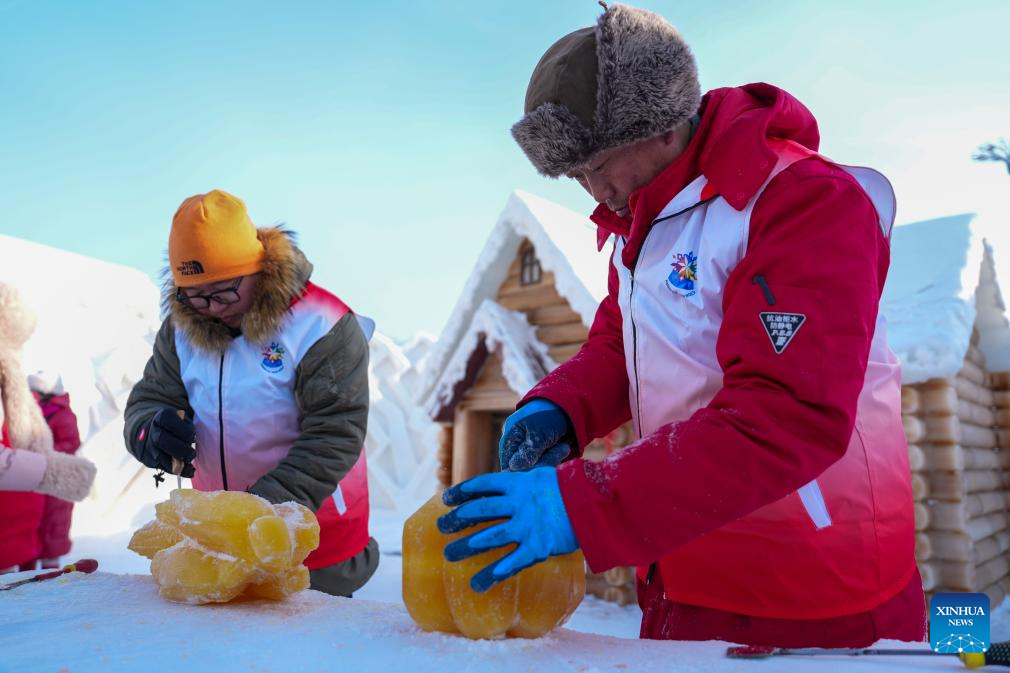
Sculptors carve plant-dyed ice sculptures at the Harbin Ice and Snow World in Harbin, northeast China's Heilongjiang Province, Jan. 28, 2026. Using plant-dyed ice for carving, ice sculptors brought a fresh visual experience to the art of ice sculpture at this year's Harbin Ice and Snow World.
Plant-dyed ice is produced by extracting plant pigments from wood flour, leaves, and flowers, followed by special processing and freezing to form colored ice blocks.
When spring arrives and temperature rises, the ice will melt, and the dyed ice will biodegrade naturally and blend into the ecosystem without leaving any pollution. (Xinhua/Wang Song)

A visitor poses for photos in front of a plant-dyed ice house at the Harbin Ice and Snow World in Harbin, northeast China's Heilongjiang Province, Jan. 28, 2026. Using plant-dyed ice for carving, ice sculptors brought a fresh visual experience to the art of ice sculpture at this year's Harbin Ice and Snow World.
Plant-dyed ice is produced by extracting plant pigments from wood flour, leaves, and flowers, followed by special processing and freezing to form colored ice blocks.
When spring arrives and temperature rises, the ice will melt, and the dyed ice will biodegrade naturally and blend into the ecosystem without leaving any pollution. (Xinhua/Wang Song)
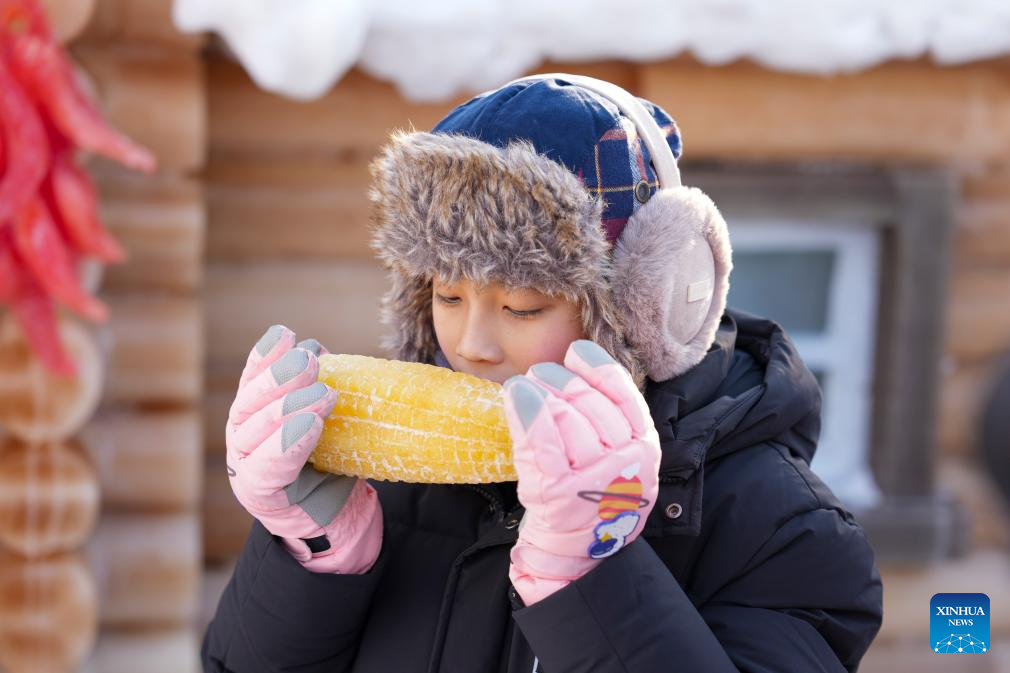
A visitor observes a plant-dyed ice sculpture at the Harbin Ice and Snow World in Harbin, northeast China's Heilongjiang Province, Jan. 28, 2026. Using plant-dyed ice for carving, ice sculptors brought a fresh visual experience to the art of ice sculpture at this year's Harbin Ice and Snow World.
Plant-dyed ice is produced by extracting plant pigments from wood flour, leaves, and flowers, followed by special processing and freezing to form colored ice blocks.
When spring arrives and temperature rises, the ice will melt, and the dyed ice will biodegrade naturally and blend into the ecosystem without leaving any pollution. (Xinhua/Wang Song)
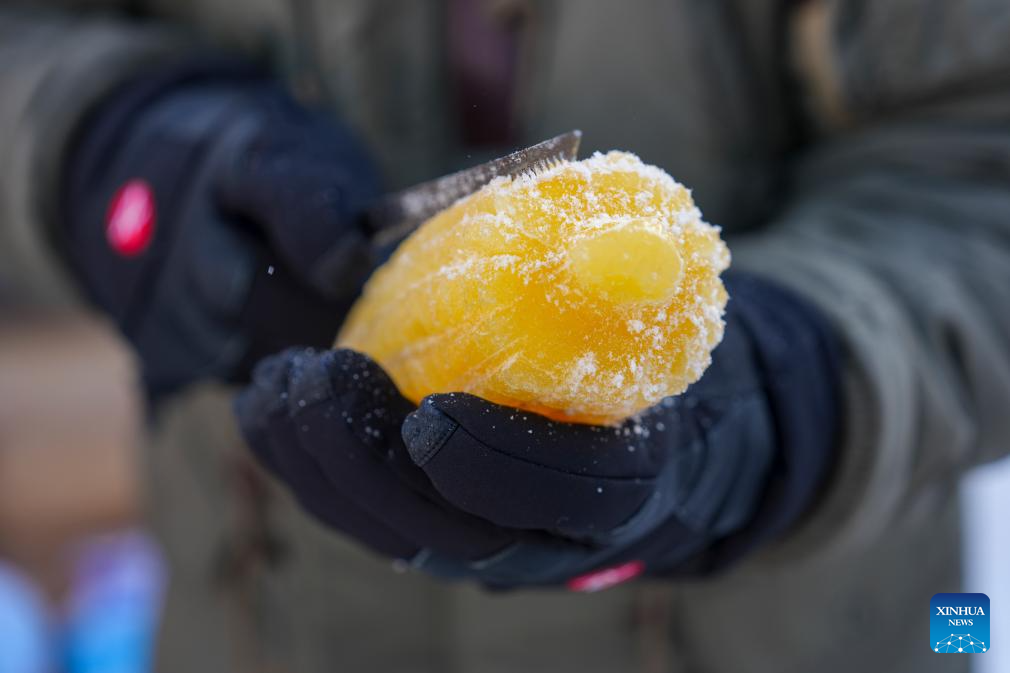
A sculptor carves a plant-dyed ice sculpture at the Harbin Ice and Snow World in Harbin, northeast China's Heilongjiang Province, Jan. 28, 2026. Using plant-dyed ice for carving, ice sculptors brought a fresh visual experience to the art of ice sculpture at this year's Harbin Ice and Snow World.
Plant-dyed ice is produced by extracting plant pigments from wood flour, leaves, and flowers, followed by special processing and freezing to form colored ice blocks.
When spring arrives and temperature rises, the ice will melt, and the dyed ice will biodegrade naturally and blend into the ecosystem without leaving any pollution. (Xinhua/Wang Song)
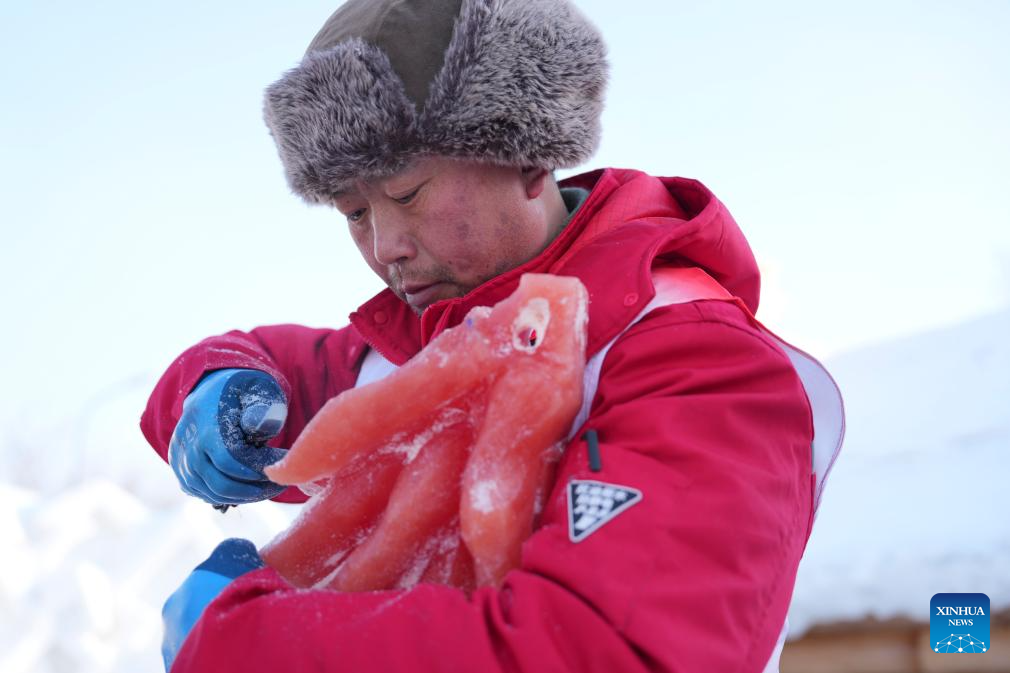
A sculptor carves a plant-dyed ice sculpture at the Harbin Ice and Snow World in Harbin, northeast China's Heilongjiang Province, Jan. 28, 2026. Using plant-dyed ice for carving, ice sculptors brought a fresh visual experience to the art of ice sculpture at this year's Harbin Ice and Snow World.
Plant-dyed ice is produced by extracting plant pigments from wood flour, leaves, and flowers, followed by special processing and freezing to form colored ice blocks.
When spring arrives and temperature rises, the ice will melt, and the dyed ice will biodegrade naturally and blend into the ecosystem without leaving any pollution. (Xinhua/Wang Song)
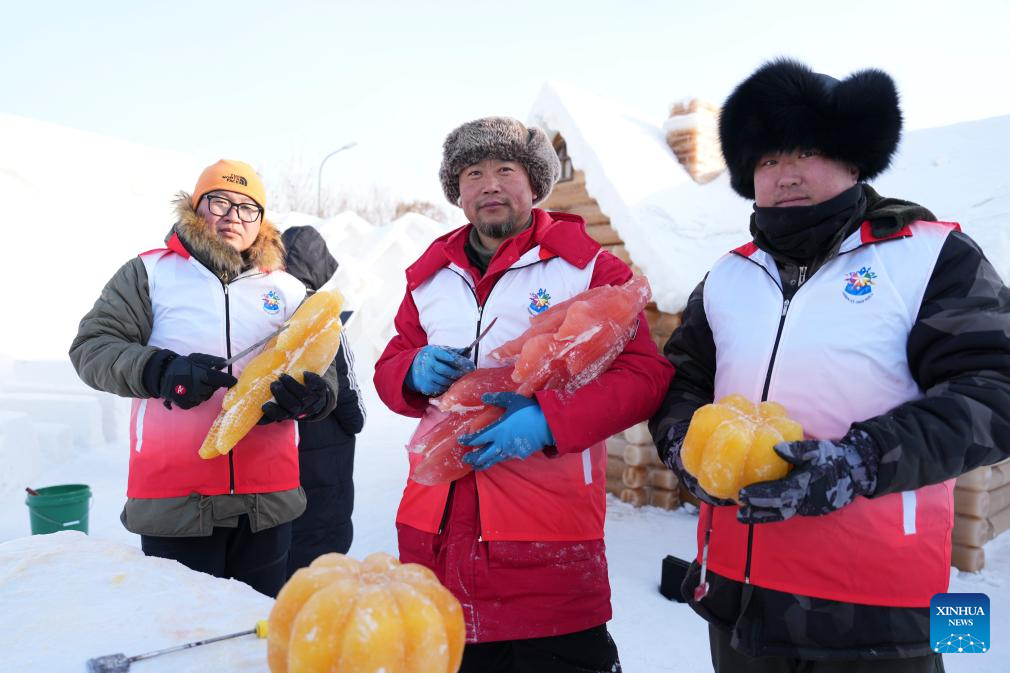
Sculptors display plant-dyed ice sculptures at the Harbin Ice and Snow World in Harbin, northeast China's Heilongjiang Province, Jan. 28, 2026. Using plant-dyed ice for carving, ice sculptors brought a fresh visual experience to the art of ice sculpture at this year's Harbin Ice and Snow World.
Plant-dyed ice is produced by extracting plant pigments from wood flour, leaves, and flowers, followed by special processing and freezing to form colored ice blocks.
When spring arrives and temperature rises, the ice will melt, and the dyed ice will biodegrade naturally and blend into the ecosystem without leaving any pollution. (Xinhua/Wang Song)


